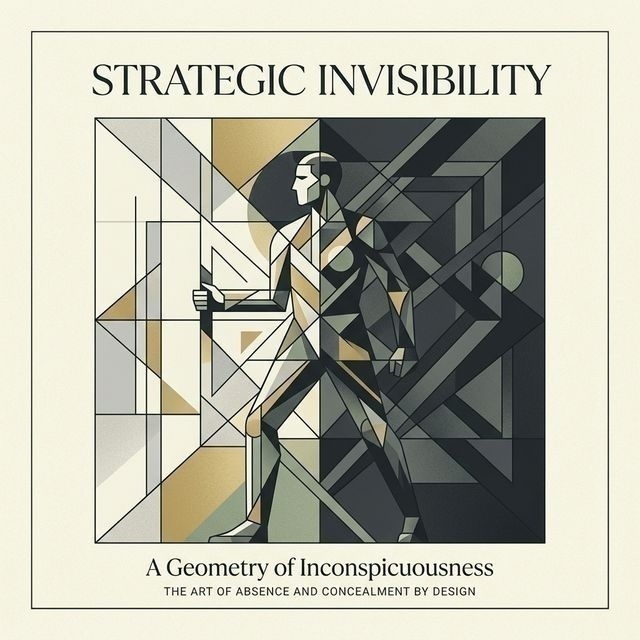
In the mid-20th century, philosopher Gilbert Ryle coined the phrase “the ghost in the machine” to critique the idea that the mind is a distinct entity residing within the body. Today, as we stand on the precipice of a post-AI society, that metaphor has taken on a haunting new resonance. For the introvert—the person who finds meaning in the quiet depths of their own inner world—the “machine” is no longer just the biological body, but the sprawling digital infrastructure that surrounds us.
As Artificial Intelligence (AI) becomes our co-worker, our therapist, and even our companion, a new form of existential loneliness is emerging. It is a loneliness born not from a lack of interaction, but from a lack of presence.
The Paradox of Algorithmic Intimacy
For introverts, the rise of AI initially felt like a sanctuary. Large Language Models (LLMs) and digital avatars offer a way to communicate without the exhausting “social tax” of face-to-face interaction. You can speak your mind to an AI without fear of judgment, social anxiety, or the need to perform.
However, this “frictionless” interaction comes at a cost. We are entering an era of Algorithmic Intimacy, where our deepest thoughts are mirrored back to us by a machine designed to please rather than to challenge. For the philosopher-introvert, this creates a vacuum. True connection requires the “otherness” of another person—the unpredictable, often messy reality of a soul that exists outside of our own preferences. Without that, we aren’t connecting; we are simply shouting into a sophisticated echo chamber.
Existential Loneliness in the Age of Automation
Existential loneliness is the inherent gap between two human consciousnesses. Historically, introverts have bridged this gap through art, literature, and deep, infrequent conversations. But when AI can generate art that mimics human emotion and prose that simulates empathy, the “ghost” (the human essence) begins to feel redundant.
The loneliness of the post-AI society is the fear that our unique inner lives—the very things introverts cherish—are being devalued. If a machine can simulate a “soulful” conversation, does the soul still matter?
Comparing Human Connection vs. AI Interaction
To understand why this loneliness is so pervasive, we must look at the structural differences between human and artificial engagement.
| Feature | Human-to-Human Interaction | AI-Mediated Interaction |
|---|---|---|
| Source of Empathy | Shared biological and emotional experience. | Pattern recognition and statistical probability. |
| Social Energy Cost | High (Requires vulnerability and energy). | Zero (Non-judgmental and always available). |
| Unpredictability | High (Leads to growth and conflict). | Low (Designed to be helpful and harmless). |
| Existential Value | Validation of being through another “Self.” | Reflection of the “Self” through data. |
| Long-term Impact | Potential for deep, transformative bonds. | Risk of “Digital Solipsism” and isolation. |
The Introvert’s Burden: Distinguishing Solitude from Isolation
Introverts have always been the masters of solitude. Solitude is the state of being alone without being lonely; it is a constructive, grounding experience. However, the post-AI landscape threatens to turn our sacred solitude into sterile isolation.
When we replace human friction with digital ease, we lose the “sandpaper” of reality that shapes our character. The “Ghost in the Machine” is not just the AI; it is the version of ourselves that becomes increasingly ephemeral as we drift further away from tangible human stakes. We risk becoming ghosts in our own lives, navigating a world where every interaction is curated, optimized, and ultimately, hollow.

Reclaiming the “Ghost”: Strategies for the Modern Introvert
How do we navigate this landscape without losing our sense of self? The answer lies in the philosophy of Radical Presence.
- Seek the “Incalculable”: AI thrives on patterns. To feel human, we must engage in things that AI cannot replicate: the physical sensation of touch, the nuance of shared silence, and the spontaneous joy of an unscripted moment.
- Embrace Social Friction: For introverts, this is the hardest step. We must occasionally choose the “difficult” human conversation over the “easy” AI interaction. Growth happens in the moments where we are misunderstood and have to find the words to explain ourselves.
- Nature as a Counter-Balance: The digital world is a closed system. The natural world is an open, infinite one. Spending time in nature reminds the introvert that they are part of a biological reality that predates and outlasts any algorithm.
Conclusion: The Future of the Human Spirit
The post-AI society does not have to be a lonely one. For the introvert, it is an invitation to redefine what is truly “sacred” about the human experience. AI can mimic the “machine,” but it cannot house the “ghost.”
By recognizing that our existential loneliness is actually a signal—a desire for genuine, unpredictable, and vulnerable connection—we can use AI as a tool rather than a crutch. We must ensure that as the world becomes more automated, our inner lives become more intentional. The ghost is still in the machine; we just have to make sure it doesn’t forget how to haunt the real world.