Imagine a world where your smartphone never becomes obsolete, but instead evolves as you swap out its camera or battery like building blocks. Modular design is no longer a sci-fi dream; it is the backbone of a circular economy that treats waste as a design flaw rather than an inevitability.
The “Supply Chain for Life” model shifts the focus from selling as many units as possible to keeping a single product in use for as long as possible. By creating products with interchangeable parts, companies are slashing global e-waste, reducing carbon footprints, and building deeper loyalty with a generation of eco-conscious consumers.
Breaking the Cycle of Planned Obsolescence
For decades, the global economy has operated on a linear “take-make-dispose” model. Products were intentionally designed with a finite lifespan—a practice known as planned obsolescence—to ensure repeat purchases. This has led to a staggering 50 million metric tons of e-waste generated annually, much of it containing toxic heavy metals.
The “Supply Chain for Life” philosophy flips this script. It posits that a product’s journey doesn’t end at the point of sale; the supply chain must account for repair, refurbishment, and eventual component harvesting. Modular design is the engine of this transition, allowing for the “surgical” replacement of failed components without discarding the entire unit.
The Core Pillars of Modular Product Design
To achieve true longevity, modular design must go beyond simple aesthetics. It requires a fundamental shift in engineering and logistics:
- Standardization of Components: Using universal connectors and fasteners ensures that parts from different generations—or even different brands—can work together.
- Tool-Free Accessibility: If a consumer needs a specialized lab to open a device, the modularity is a failure. True circular design prioritizes ease of disassembly using common tools or no tools at all.
- Interoperability: High-fidelity modularity allows for upgrades. Instead of buying a new laptop for a faster processor, you simply slot in a new CPU module.
- Digital Product Passports: Advanced supply chains now use blockchain or QR codes to track the history, material composition, and repair record of every module.
Economic and Environmental Wins
The move toward modularity isn’t just about “being green”; it’s a calculated business move. When a company adopts a circular supply chain, they insulate themselves against raw material price volatility. By recovering and refurbishing high-value components (like cobalt or lithium), manufacturers reduce their reliance on expensive and ethically fraught mining operations.
Furthermore, modularity opens the door to “Product-as-a-Service” (PaaS) business models. Instead of owning a washing machine, a consumer might pay for a “clean clothes” subscription. The manufacturer retains ownership of the machine, giving them a massive financial incentive to design it for 20 years of life rather than five.
Real-World Champions of Modularity
Several pioneers are proving that modularity can scale:
- Framework Laptops: Their laptops are designed to be completely disassembled by the user. Every part, from the keyboard to the ports, is available for individual purchase and upgrade.
- Fairphone: Often cited as the gold standard for circular electronics, Fairphone provides a modular smartphone where users can replace the screen or camera module in under two minutes.
- Floyd Furniture: By focusing on modular bed frames and tables that can be expanded or shrunk based on the user’s living space, they prevent large-scale furniture waste during moves.
Overcoming the Logistics Hurdle
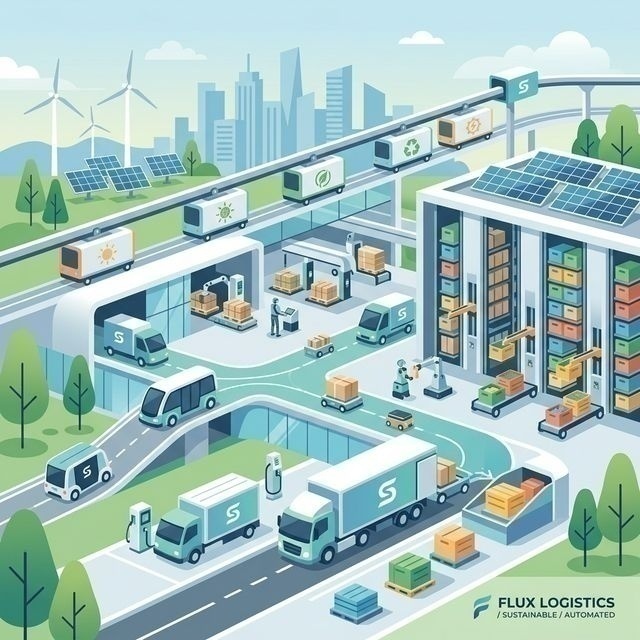
The greatest challenge to the Circular Economy isn’t the design of the product, but the “Reverse Logistics” of the supply chain. How do you get a broken module back from a customer in a rural area? How do you refurbish it at scale?
Companies are now investing in “Micro-Fulfillment Centers” that act as local repair and harvesting hubs. By decentralizing the repair process, the carbon footprint of shipping parts back to a central factory is minimized, making the Supply Chain for Life both ecologically and economically viable.
Comparison: Linear vs. Modular Circular Economies
| Feature | Linear Economy (Old) | Modular Circular Economy (New) |
|---|---|---|
| Product Goal | Short-term consumption | Long-term utility (Longevity) |
| Design Priority | Low production cost | Ease of repair and upgrade |
| Customer Relationship | Ends at purchase | Continuous (Service/Support) |
| Waste Management | Landfill or incineration | Component harvesting & reuse |
| Supply Chain | One-way (Raw to Trash) | Closed-loop (Constant circulation) |
| Resource Dependency | High (Virgin materials) | Low (Refurbished components) |
Conclusion: The Future is Repairable
The transition to a circular economy is the most significant shift in manufacturing since the Industrial Revolution. By embracing modular product design, we aren’t just reducing waste; we are reclaiming our right to repair and demanding products that respect the resources required to build them. The Supply Chain for Life isn’t just a trend—it’s the only way forward for a planet with finite resources and infinite potential for innovation.