
In the heart of concrete jungles like New York, Tokyo, and London, a quiet revolution is taking root. It isn’t happening in the soil of vast rural plains, but on skyscrapers, inside repurposed shipping containers, and within the sleek kitchens of Michelin-starred restaurants. This is the era of hyper-local urban farming—a movement centered on the “zero-mile” ingredient.
For decades, the global food supply chain has relied on a complex web of logistics, often requiring produce to travel thousands of miles before reaching a plate. However, the modern culinary world is pivoting. Driven by a desire for peak freshness, environmental stewardship, and food security, urban centers are transforming into productive agricultural hubs.
The Technology Behind the Green Concrete
Hyper-local farming is rarely about traditional dirt and tractors. Instead, it utilizes high-tech methods like hydroponics (growing plants in nutrient-rich water), aeroponics (misting roots with nutrients), and aquaponics (a symbiotic system with fish).
These controlled-environment agriculture (CEA) systems allow farmers to grow produce year-round, regardless of the local climate. By stacking layers of crops vertically, urban farms can produce significantly higher yields per square foot than traditional horizontal farms. This efficiency is critical in land-scarce global cities where every inch of real estate comes at a premium.
Why “Zero-Mile” Matters: A Comparison
The shift from “farm-to-table” to “basement-to-table” isn’t just a marketing gimmick; it represents a fundamental change in food quality and sustainability. To understand the impact, let’s look at how hyper-local farming stacks up against traditional industrial agriculture.
| Feature | Industrial Agriculture (Long-Haul) | Hyper-Local Urban Farming (Zero-Mile) |
|---|---|---|
| Average Transit Distance | 1,500+ miles | Less than 5 miles |
| Harvest-to-Plate Time | 5 to 14 days | Minutes to hours |
| Water Usage | High (due to evaporation/runoff) | Up to 95% less (closed-loop) |
| Nutrient Density | Degrades during transit/storage | Peak levels at consumption |
| Seasonality | Artificial (shipped from other hemispheres) | 365-day availability |
| Carbon Footprint | High (trucking, shipping, cooling) | Negligible |
The Culinary Impact: Flavor Without Compromise
From a culinary perspective, the zero-mile movement is a game-changer. When a plant is harvested, it immediately begins to lose its nutritional value and flavor profile. Sugars turn to starches, and volatile aromatic compounds evaporate.
By growing ingredients on-site or within the same ZIP code, chefs have access to “living” ingredients. Imagine a basil leaf that was still attached to its stem seconds before being torn over a Margherita pizza, or microgreens that haven’t seen the inside of a refrigerated truck. The intensity of flavor and the crispness of texture found in zero-mile produce are incomparable to their long-traveled counterparts.
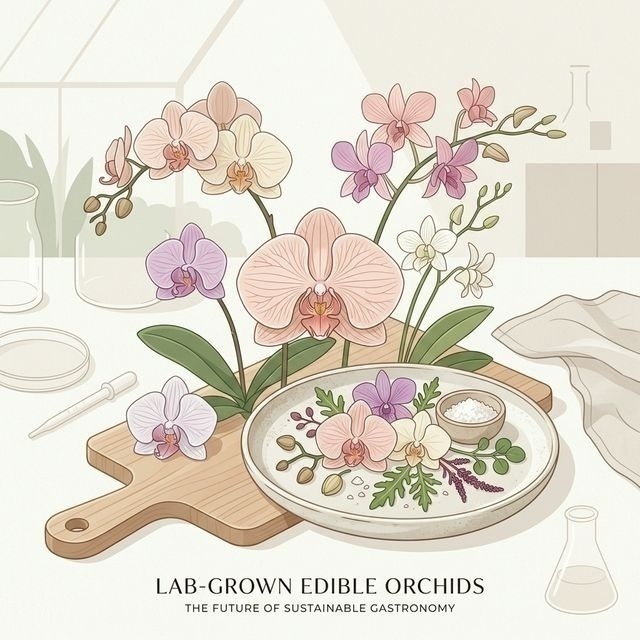
Furthermore, urban farming allows for the cultivation of “heirloom” or fragile varieties that are usually too delicate for industrial shipping. This expands the culinary palette, allowing chefs to experiment with rare herbs and greens that would otherwise wilt before reaching the kitchen.
Solving the “Last Mile” and Environmental Challenges
The logistics of the “last mile”—the final leg of a product’s journey to the consumer—is often the most carbon-intensive and expensive. Hyper-local farming eliminates this bottleneck entirely. By producing food where it is consumed, cities reduce their reliance on heavy trucking, which in turn lowers CO2 emissions and urban traffic congestion.
Moreover, these green installations help combat the “urban heat island” effect. Rooftop gardens provide natural insulation for buildings, reducing energy consumption for cooling, while indoor vertical farms can be powered by renewable energy sources, creating a truly circular urban economy.
The Future: Edible Cities
As we look toward 2030 and beyond, the integration of agriculture into urban planning will likely become standard. We are moving toward a future where “food deserts” are eliminated by modular farming units in community centers, and where the grocery store of the future grows its own lettuce in the produce aisle.
Hyper-local urban farming is more than just a trend for foodies; it is a necessary evolution of our food system. It reconnects urban dwellers with the origin of their food, ensures resilience against global supply chain disruptions, and offers a delicious, sustainable path forward for the global culinary culture. The “zero-mile” ingredient is no longer a luxury—it is the blueprint for a greener, tastier world.