
The age of “take-make-waste” is nearing its expiration date as resource scarcity and regulatory pressures reshape the global market. Investors who ignore the shift toward regenerative business models are missing out on the most significant efficiency play of the 21st century.
Traditional manufacturing follows a linear path that ends in a landfill, exposing companies to volatile raw material prices and heavy waste-disposal costs. In contrast, circular economy companies design products to be reused, refurbished, or recycled, successfully decoupling economic growth from resource consumption and creating a more resilient, high-margin investment opportunity.
The Death of the Linear Model: Why “Take-Make-Waste” is a Liability
For over a century, the global economy has been built on a linear model. Companies extract raw materials, manufacture products, and sell them to consumers who eventually throw them away. While this worked in an era of perceived resource abundance, it has become a massive financial liability in the modern age.
Traditional manufacturers are now facing a “triple threat”:
* Input Volatility: As rare earth minerals and quality raw materials become harder to extract, price swings eat into profit margins.
* Regulatory “Sticks”: Governments are implementing Extended Producer Responsibility (EPR) laws, forcing companies to pay for the end-of-life disposal of their products.
* Consumer Backlash: A growing demographic of Gen Z and Millennial investors and consumers are actively boycotting brands with high environmental footprints.
The Circular Alpha: How Regenerative Models Drive Profit
Regenerative business models—often referred to as the Circular Economy—don’t just “do less harm.” They are designed to be restorative. From an investment perspective, this creates “Circular Alpha”—the ability to generate superior returns by eliminating waste and maximizing resource utility.
1. Reduced Cost of Goods Sold (COGS)
By reclaiming materials at the end of a product’s life, companies like Apple and Schneider Electric reduce their reliance on virgin mining. When a company can harvest high-grade aluminum or cobalt from its own old products, it bypasses the volatile global commodities market. This creates a predictable and lower cost structure that traditional manufacturers simply cannot match.
2. Service-Based Revenue Streams
Circular stocks often shift from “selling a product” to “selling a service.” For example, instead of selling a lightbulb, a company might sell “lighting-as-a-service.” This creates recurring, predictable revenue (SaaS-style) and keeps the physical asset on the company’s books, incentivizing them to build products that last forever rather than products designed for “planned obsolescence.”
3. Supply Chain Resilience
During the 2021-2022 global supply chain crisis, companies with localized recycling loops outperformed those waiting on shipments from overseas. A regenerative model acts as a natural hedge against geopolitical instability; if your “mine” is the local recycling center or your own warehouse, you aren’t at the mercy of a blocked shipping canal.
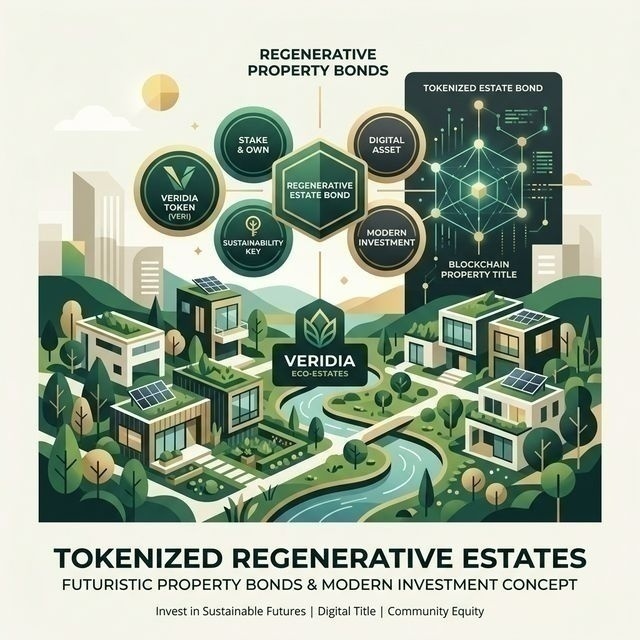
Identifying the Winners: What to Look For in a Circular Stock
Not every company with a “green” logo is a circular winner. True regenerative leaders share three specific characteristics:
- Modular Design: Can the product be easily repaired or upgraded? Companies like Dell and HP are increasingly moving toward modular hardware that avoids total replacement.
- Reverse Logistics Infrastructure: Does the company have the physical capability to take back products? A company that has mastered the “return loop” has a massive competitive moat.
- High Circularity Rate: Look for the percentage of revenue derived from refurbished products or products made from recycled content.
The Regulatory Tailwind: A Forced Evolution
The transition to circularity isn’t just a choice; it’s becoming a requirement. The European Union’s Circular Economy Action Plan and the SEC’s increasing focus on climate-related disclosures are forcing transparency. Companies that have already optimized their regenerative loops are years ahead of the competition, who will soon be forced to spend billions in capital expenditures just to catch up to new environmental standards.
Comparison: Traditional vs. Regenerative Models
| Feature | Traditional Manufacturing (Linear) | Regenerative Business (Circular) |
|---|---|---|
| Resource Sourcing | Virgin raw materials (Mining/Extraction) | Recycled, bio-based, or reclaimed inputs |
| Revenue Model | One-time transaction (High volume) | Recurring service or resale (High value) |
| Risk Profile | High exposure to commodity price shocks | Low exposure; price stability through reuse |
| Product Lifecycle | Planned obsolescence (Built to break) | Durability and modularity (Built to last) |
| Waste Management | Cost center (Disposal fees/Taxes) | Profit center (Material recovery) |
| Investor Appeal | Volatile, high-carbon “Value Trap” | Resilient, ESG-compliant “Growth Play” |
Conclusion: The Future is Round
The data is clear: companies that view waste as a design flaw rather than an inevitability are outperforming their peers. For the personal finance enthusiast, circular economy stocks represent a rare opportunity to align a portfolio with the physical realities of the planet while capturing the efficiency gains of the next industrial revolution. Traditional manufacturing is fighting a losing battle against resource exhaustion; regenerative models are just getting started.