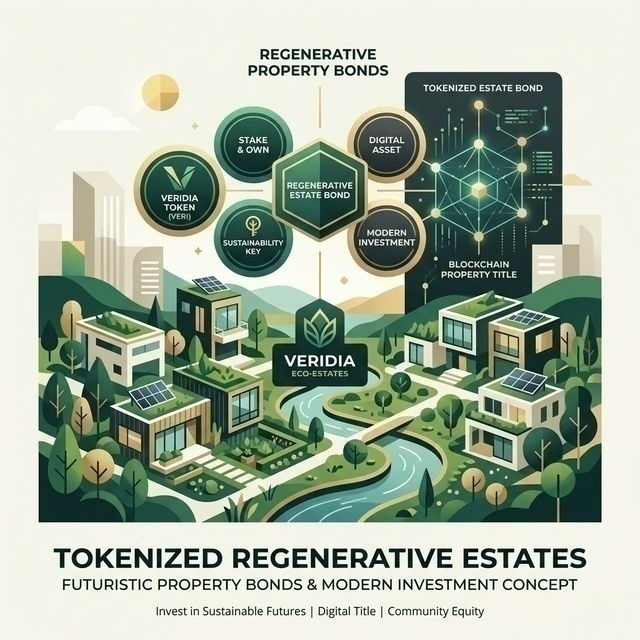
For decades, the financial world has focused on minimizing harm through ESG frameworks, but the needle hasn’t moved far enough to secure our global future. Now, a new paradigm is emerging: investing not just to sustain our world, but to actively heal it—and the returns are proving to be remarkably resilient.
While ESG (Environmental, Social, and Governance) focuses on avoiding “bad” companies to manage risk, regenerative investing goes a step further by funding businesses that restore ecosystems and strengthen communities. It is a shift from “doing no harm” to “doing restorative good,” aiming for long-term profit by ensuring the very systems we depend on—like healthy soil, clean water, and stable societies—can actually thrive and grow.
The Limitations of the ESG Era
ESG was a necessary first step. It taught investors to look at a company’s carbon footprint, its board diversity, and its ethical governance. However, ESG has largely become a defensive strategy—a way to mitigate risk and avoid “sin stocks.”
The problem is that a world that is merely “sustained” at its current level of degradation is still a world in crisis. As greenwashing allegations rise and ESG ratings become increasingly muddled, sophisticated investors are looking for something more tangible. They want to know that their capital isn’t just “less bad,” but is actually part of the solution.
What Exactly is Regenerative Investing?
Regenerative investing is inspired by the principles of regenerative agriculture. In farming, regeneration doesn’t just mean “not using pesticides”; it means building the health of the soil so that it becomes more fertile every year.
In a personal finance context, regenerative investing means placing capital into enterprises that:
* Restore Natural Capital: Increasing biodiversity, sequestering carbon, and purifying watersheds.
* Strengthen Social Fibers: Investing in affordable housing, fair-trade supply chains, and community-owned energy.
* Promote Circularity: Moving away from the “take-make-waste” model toward a circular economy where waste is designed out of the system.
Unlike traditional finance, which often views the environment as an “externality” (something outside the balance sheet), regenerative finance views the environment as the very foundation of the balance sheet.
The Business Case: Why Regeneration Outperforms
Critics often argue that focusing on restoration hurts the bottom line. However, the data suggests the opposite. Regenerative systems are inherently more resilient to shocks.
- Supply Chain Security: Companies that invest in the health of their suppliers and the ecosystems they rely on (like coffee brands investing in regenerative soil health) face fewer disruptions from climate change.
- Regulatory Future-Proofing: As carbon taxes and environmental regulations tighten globally, regenerative companies are already ahead of the curve, avoiding the massive “stranded asset” risks faced by fossil-fuel-heavy portfolios.
- Consumer Loyalty: Modern consumers, particularly Gen Z and Millennials, are increasingly voting with their wallets. They are moving away from brands that “offset” their damage and toward brands that are “net positive.”
The Three Pillars of a Regenerative Portfolio
If you want to move your personal investments toward a regenerative model, focus on these three high-impact areas:
- Regenerative Agriculture & Food Systems: Look for private equity funds or REITs (Real Estate Investment Trusts) that focus on transitioning traditional farmland to regenerative organic practices. These assets offer a hedge against inflation and provide a tangible, “dirt-under-the-fingernails” impact.
- Renewable Energy & Storage: Beyond just buying a “green” ETF, look for community solar projects or companies developing long-duration battery storage. This infrastructure is the backbone of a restorative energy grid.
- The Circular Economy: Invest in companies specializing in “Reverse Logistics” or “Advanced Recycling.” These firms are turning the waste of the old economy into the raw materials of the new one.

How to Get Started as an Individual Investor
You don’t need to be a billionaire to start. While many regenerative opportunities are currently in the private equity space, the public markets are catching up.
- Direct Public Offerings (DPOs): Many regenerative startups allow community members to invest directly.
- Thematic ETFs: Look for funds specifically labeled “Circular Economy” or “Impact Restoration” rather than broad-market ESG funds.
- Community Development Financial Institutions (CDFIs): You can move your cash into banks or credit unions that lend specifically to underserved communities and restorative local projects.
ESG vs. Regenerative Finance: A Comparison
| Feature | ESG (Environmental, Social, Governance) | Regenerative Investing |
|---|---|---|
| Primary Goal | Risk mitigation and compliance | Restoration and systemic health |
| Philosophy | Do no harm (Sustainability) | Create net-positive impact (Restoration) |
| View of Nature | A resource to be managed efficiently | A living system to be nurtured |
| Metric for Success | Relative performance (e.g., “Better than peers”) | Absolute outcomes (e.g., “Tons of carbon sequestered”) |
| Economic Model | Linear efficiency | Circular and distributive |
| Investor Mindset | Defensive / Avoiding “bad” | Proactive / Building “good” |
The Bottom Line
The shift from ESG to regenerative investing represents the maturation of the sustainable finance movement. We are moving past the era of checkboxes and into the era of real-world results. For the forward-thinking investor, the goal is no longer just to survive the market’s volatility—it is to invest in a world that is worth living in. By focusing on restoration, you aren’t just protecting your wealth; you are ensuring the health of the systems that make that wealth possible in the first place.