For decades, the warehouse floor was measured solely by “units per hour,” often at the cost of the human body and mind. Today, a new era of “Supply Chain for Life” is emerging where AI doesn’t just speed up fulfillment—it protects the person behind the parcel.
This article explores how advanced AI, computer vision, and wearable technology are transforming warehouses from high-stress environments into wellness-first hubs by predicting ergonomic risks and monitoring mental fatigue in real-time.
The Invisible Crisis on the Warehouse Floor
In the traditional logistics model, the human element was often treated as a variable to be optimized rather than a life to be sustained. This “efficiency at all costs” mindset led to a staggering rate of musculoskeletal disorders (MSDs) and chronic burnout. According to industry data, warehouse workers are nearly twice as likely to suffer serious injuries compared to other private-sector employees.
However, the industry is pivoting. Under the “Supply Chain for Life” philosophy, forward-thinking leaders are realizing that a broken worker is a broken supply chain. By implementing AI-driven safety protocols, companies are shifting from reactive “first aid” to proactive “wellness-first” operations.
Ergonomics 2.0: Computer Vision as a Guardian Angel
One of the most significant breakthroughs in ergonomic safety is the deployment of Computer Vision (CV). Unlike traditional wearable sensors that can be cumbersome, CV uses existing facility cameras to analyze worker movements in real-time.
- Real-Time Posture Correction: AI algorithms can detect “high-risk” movements—such as improper lifting techniques, overextending at high shelves, or repetitive twisting—and alert supervisors or the workers themselves via haptic feedback.
- Heat-Mapping for Safety: AI generates spatial heat maps showing where congestion or awkward maneuvers occur most frequently. This allows managers to redesign the warehouse layout to minimize physical strain.
- Micro-Break Optimization: Instead of rigid, scheduled breaks, AI analyzes physical exertion patterns to suggest “micro-rests” when a worker’s form begins to degrade due to muscle fatigue.
Beyond the Physical: AI and the Mental Health Frontier
While physical safety is visible, mental health has long been the “silent” disruptor in logistics. The pressure of peak seasons and the monotony of high-volume sorting can lead to “cognitive tunneling,” where workers lose situational awareness, leading to accidents and high turnover.
AI is now being used to monitor the Cognitive Load of the workforce. By analyzing picking accuracy and pace fluctuations, AI can identify early signs of mental fatigue.
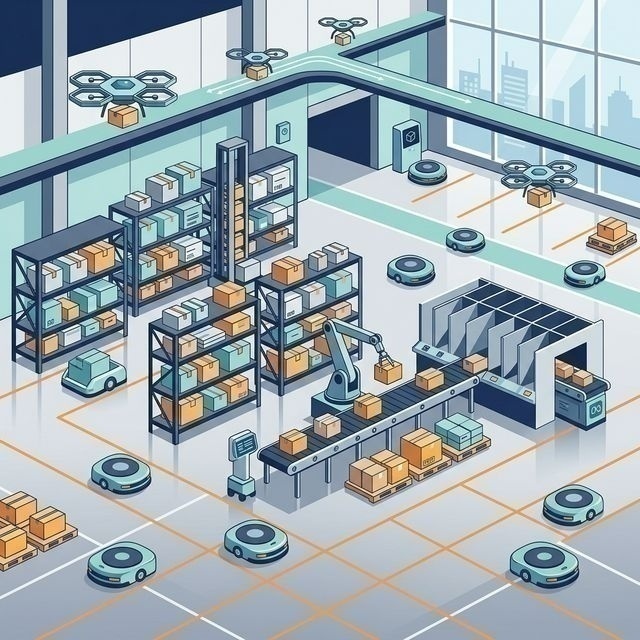
- Workload Balancing: If an AI detects that a specific zone is under extreme pressure, it can dynamically reroute autonomous mobile robots (AMRs) to assist, lowering the mental stress on the human operator.
- Gamification for Engagement: Advanced AI platforms are turning repetitive tasks into engaging, low-stress challenges that reward safety and accuracy over raw speed, fostering a more positive psychological environment.
- Sentiment Analysis: Through anonymous pulse surveys and voice-to-text feedback analyzed by Natural Language Processing (NLP), leadership can gauge the “emotional temperature” of the warehouse floor and intervene before burnout becomes an exodus.
Building Trust: The Ethics of AI Monitoring
Implementing AI for wellness requires a “Human-in-the-Loop” approach. The goal is never surveillance; it is support. To successfully implement these technologies, companies must prioritize transparency:
- Data Privacy: Workers must be assured that ergonomic data is used for coaching and safety, not for punitive performance reviews.
- Collaborative Design: Involving warehouse associates in the selection of AI tools ensures the tech solves real-world pain points rather than adding to the digital noise.
The ROI of Return on Life (ROL)
The shift toward a Wellness-First Warehouse isn’t just a moral imperative; it’s a competitive necessity. Companies prioritizing ergonomic and mental health AI report a significant reduction in worker compensation claims, lower turnover rates, and—ironically—higher long-term productivity. When workers feel safe and valued, the entire supply chain becomes more resilient.
Comparison: Traditional vs. Wellness-First Warehousing
| Feature | Traditional Warehouse | AI-Driven Wellness Warehouse |
|---|---|---|
| Safety Approach | Reactive (Incident-based) | Predictive (Risk-prevention) |
| Ergonomic Monitoring | Manual observations/Audits | 24/7 Computer Vision Analysis |
| Worker Feedback | Annual performance reviews | Real-time haptic/digital coaching |
| Mental Health | Ignored until burnout | Dynamic workload balancing |
| Operational Goal | Maximum Throughput | Sustainable Human Performance |
| Primary Metric | Units Per Hour (UPH) | Return on Life (ROL) & Safety Score |
Conclusion: The Future is Human-Centric
The “Supply Chain for Life” is not a futuristic concept—it is being built today. By leveraging AI to safeguard the physical and mental well-being of the workforce, the logistics industry is finally proving that high-tech efficiency and human-first empathy are not mutually exclusive. The wellness-first warehouse is no longer just a place of work; it is a place of protection.