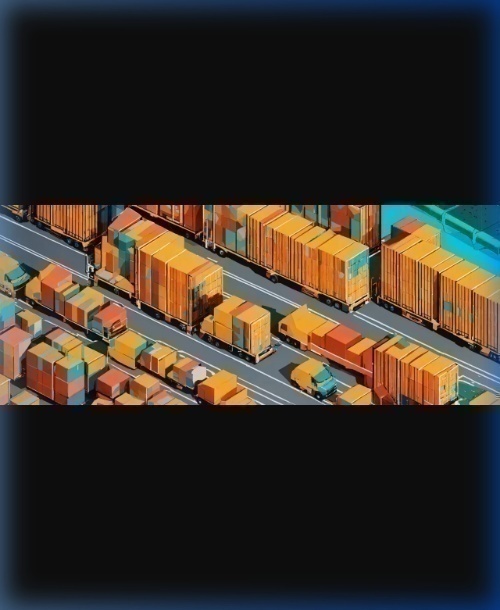
For decades, “carbon neutral” was a marketing promise written in pencil, easily erased by lack of data and corporate opacity. Today, blockchain technology is rewriting that promise in digital stone, providing an immutable ledger that tracks every gram of carbon from the raw source to the consumer’s doorstep.
In plain English: Most companies claim to be “green,” but they rarely have the data to prove it. Blockchain acts as a digital receipt for the planet; it records every environmental impact a product makes during its journey. This prevents “greenwashing” and allows you, the consumer, to scan a code and see the true environmental cost of what you’re buying.
Beyond the Greenwash: The Crisis of Trust
The modern consumer is skeptical, and for good reason. Traditional ESG (Environmental, Social, and Governance) reporting is often siloed, fragmented, and self-reported. When a brand claims a product is carbon neutral, they are often relying on estimates from third-party suppliers who may be using outdated spreadsheets or unverified data.
In the “Supply Chain for Life” ecosystem, this lack of transparency is no longer acceptable. We are moving toward a “Trust Economy,” where the value of a product is inextricably linked to its verified environmental footprint.
The Digital Thread: How Blockchain Anchors Accountability
Blockchain isn’t just for cryptocurrency; it is a distributed ledger technology that excels at one thing: creating a single version of the truth. When applied to sustainability, it creates a “Digital Product Passport.”
- Immutability: Once carbon emission data is entered into the blockchain, it cannot be altered or deleted.
- Decentralization: No single company “owns” the data. It is shared across a network of auditors, suppliers, and regulators.
- Real-Time Tracking: Integration with IoT (Internet of Things) sensors allows for live monitoring of energy consumption and emissions during production.
From Source to Consumer: A Step-by-Step Audit
To achieve true carbon neutrality, we must track the “Supply Chain for Life” across four critical stages:
1. The Source (Scope 3 Upstream)
Sustainability begins at the extraction point. Whether it’s mining lithium for batteries or harvesting organic cotton, blockchain-connected sensors record the machinery’s fuel consumption and the land-use changes. This data is “hashed” onto the block, ensuring the raw material’s carbon starting point is accurate.
2. Manufacturing and Transformation
As raw materials move into factories, the energy mix (renewables vs. fossil fuels) is logged. Smart contracts—self-executing code on the blockchain—can automatically trigger the purchase of carbon offsets if a factory exceeds a pre-set emission threshold for a specific production run.
3. Logistics and Distribution
The “middle mile” is often the most opaque. By integrating GPS and telematics with a blockchain ledger, companies can track the precise carbon output of cargo ships, planes, and trucks. This replaces “average shipping estimates” with actual, verified data points.
4. The Consumer Handshake
This is where the “Supply Chain for Life” comes full circle. At the point of sale, a consumer scans a QR code. They aren’t just seeing a “Green” badge; they are seeing a verified map of the product’s journey, the total carbon sequestered, and the specific reforestation projects that offset the remaining footprint.
Smart Contracts: The Future of Automated Offsetting
The most revolutionary aspect of this technology is the use of Smart Contracts. Imagine a supply chain where carbon credits are retired in real-time. As a truck delivers a pallet of goods, the blockchain calculates the emissions of that trip and automatically executes a transaction to buy an equivalent amount of high-quality, verified carbon credits. This removes the “accounting lag” that plagues corporate sustainability goals today.
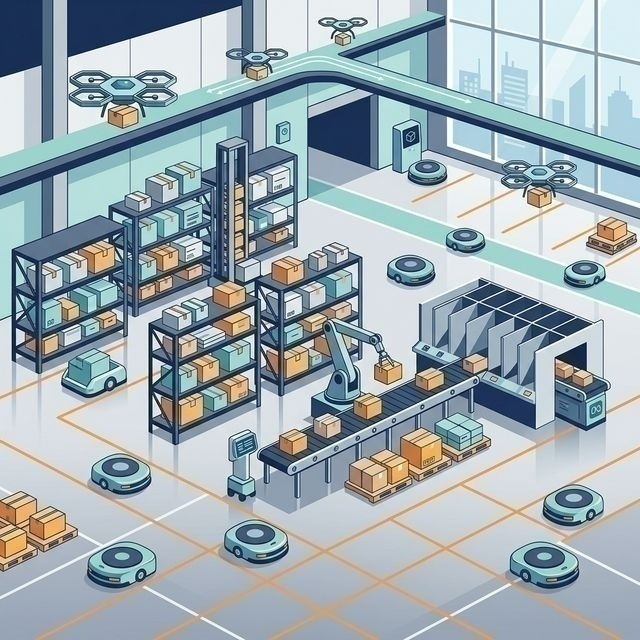
The Economic Incentive for Transparency
Why would companies adopt this? Beyond moral obligation, there is a clear financial incentive. “Green premiums” are real; consumers are increasingly willing to pay more for products with a verified low-carbon footprint. Furthermore, as carbon taxes become reality in the EU and North America, having a blockchain-verified record of low emissions can save companies millions in regulatory penalties.
Comparison: Traditional Tracking vs. Blockchain-Verified Sustainability
| Feature | Traditional ESG Reporting | Blockchain-Verified Tracking |
|---|---|---|
| Data Source | Manual entry / Spreadsheets | IoT Sensors & Automated Feeds |
| Verification | Periodic 3rd-party audits | Real-time, continuous validation |
| Transparency | Private, “Black Box” data | Public/Consortium Ledger |
| Trust Level | Low (Susceptible to Greenwashing) | High (Immutable & Tamper-proof) |
| Offsetting | Annual retrospective purchases | Real-time, Smart Contract-driven |
| Consumer Access | Generic labels (e.g., “Eco-friendly”) | Radical Transparency (QR / Serialized) |
Conclusion: The New Standard for the Supply Chain for Life
The transition to a carbon-neutral world cannot happen on the honor system. It requires a hard-coded architecture of accountability. By leveraging blockchain, we are turning the supply chain from a dark, complex web into a transparent, living system. This is more than just tech; it is the infrastructure for a planet that demands proof before it grants its trust.
For the modern enterprise, the message is clear: digitize your sustainability, or get left behind in the era of radical transparency.