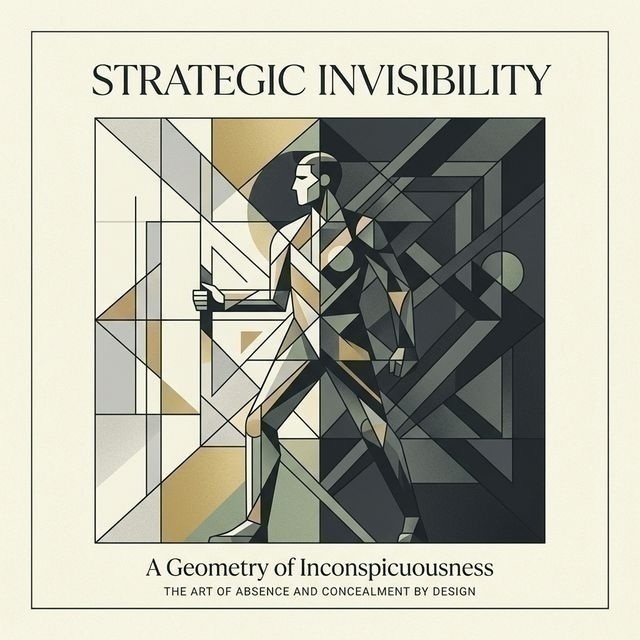
In an era where algorithms can predict your next desire before you’ve even felt it, the boundary between the self and the “other” is rapidly dissolving. For the introvert, this is not merely a data breach; it is an existential crisis of the soul.
Privacy is more than just keeping secrets; it is the spiritual requirement of having an inner life that isn’t for sale. As AI begins to map our cognitive patterns, we must shift from protecting our “data” to protecting our “being,” ensuring that our internal silence remains a sacred, unmonitored space.
The Introvert’s Citadel: Why Privacy is a State of Being
For the philosophical introvert, the “inner self” is not a storage unit for facts—it is a sanctuary. In metaphysical terms, privacy is the “architectural silence” required for the self to form. Without a space where we are not being observed, we cease to be individuals and instead become echoes of the feedback loops surrounding us.
AI doesn’t just watch us; it calculates us. When an LLM (Large Language Model) predicts the conclusion of your sentence, it is, in a sense, colonizing your thought process. For those who find energy in solitude, the “Gaze of the Machine” acts as a constant, subtle pressure to perform, even when we are alone.
The Predictive Prison: When Privacy Becomes Predictability
The greatest threat of AI is not that it knows who you are, but that it decides who you will be. This is “algorithmic determinism.”
- The Loss of the “Undeclared”: Introverts thrive on the internal draft—the thoughts that are never spoken. AI attempts to finalize these drafts through predictive analytics.
- The Erosion of Mystery: If your behaviors are mapped perfectly, your capacity for spontaneous, “out of character” growth is diminished.
- The Feedback Loop of the Self: When AI feeds you content based on your “inner” profile, it traps you in a mirror room, preventing the very solitude that allows for true self-reflection.
The Commodification of the Subconscious
In the traditional view of privacy, we protected our addresses and credit card numbers. In the AI era, we must protect our cognitive sovereignty.
AI models are now capable of “sentiment extraction.” They analyze the cadence of your typing, the micro-expressions during a video call, and the subtle shifts in your vocabulary to map your emotional landscape. For an introvert, whose internal world is their primary residence, this is the ultimate home invasion.
We are moving from “Data Privacy” to “Neuro-Privacy.” If the machine knows your subconscious biases better than you do, it possesses a metaphysical key to your identity.
Strategies for Spiritual Data Defense
To survive this integration, we must adopt a new philosophy of “Digital Asceticism.” This isn’t about deleting your accounts; it’s about reclaiming the sanctity of the unexpressed.
- Practice Semantic Noise: Occasionally engage with ideas, searches, and topics that are wildly outside your persona. Introduce “chaos” into your digital footprint to keep the algorithm from pinning your soul down.
- The “Analogue Hour”: Dedicate time where thoughts are captured only on paper or in the mind. If it isn’t digitized, the AI cannot colonize it.
- Refuse the Nudge: Awareness is the first defense. When an AI suggests a “perfect” song or product, acknowledge the prediction—and occasionally choose the opposite just to prove your own agency.

The Future of the Inner Room
The battle for privacy is shifting from the legal courts to the consciousness. We are fighting for the right to be “unpredictable.” In a world that prizes transparency and connectivity, the introvert’s greatest act of rebellion is to remain a mystery—both to the machine and, occasionally, to themselves.
Privacy is the soil of the soul. If we allow the sun of AI to shine on that soil 24/7, nothing original will ever have the darkness it needs to grow.
Comparison: Traditional vs. Metaphysical Privacy
| Feature | Traditional Privacy (Web 2.0) | Metaphysical Privacy (AI Era) |
|---|---|---|
| Primary Goal | Protecting personal information. | Protecting the process of thought. |
| The Threat | Identity theft and hacking. | Predictive modeling and behavioral control. |
| The “Value” | My data is my property. | My internal silence is my essence. |
| Defense Tool | Encryption and Passwords. | Cognitive sovereignty and digital noise. |
| The Result of Loss | Financial or social damage. | Loss of individual agency and mystery. |
Conclusion: Reclaiming the Unseen
As we move toward a future of “Ambient Intelligence,” the introvert’s role is more vital than ever. We are the keepers of the inner flame. By demanding spaces that are free from observation and calculation, we aren’t just protecting our data—we are protecting the very definition of what it means to be human. Keep your thoughts offline, keep your spirit unpredictable, and remember: your inner self is not a data set; it is a sanctuary.