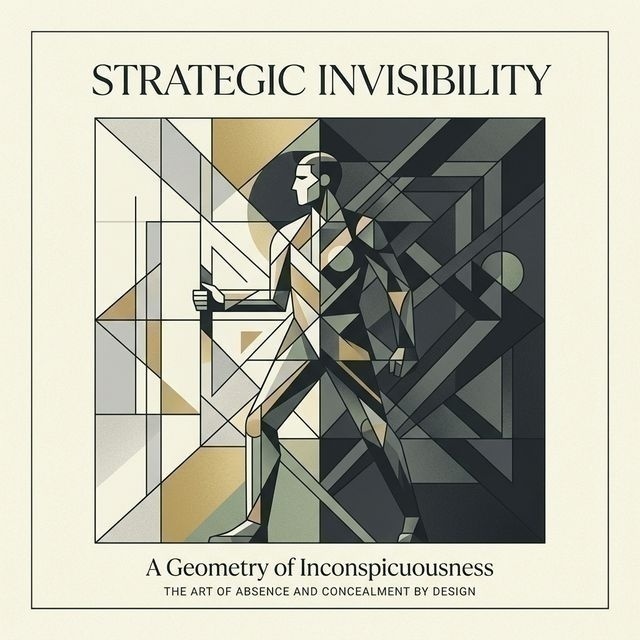
In a world where AI agents can mimic your voice and automate your social life, the true frontier of human experience has moved inward. For the introvert, the year 2026 isn’t a technological dystopia—it is the ultimate training ground for the ancient wisdom of Stoicism.
As artificial intelligence dominates social interactions and content creation by 2026, introverts are uniquely positioned to thrive by applying Stoic principles. This guide explores how to protect your mental energy, distinguish between “digital noise” and “human signal,” and use solitude as a high-performance tool in a hyper-automated society.
The Synthetic Social Landscape of 2026
By 2026, the “noise” introverts have always sought to avoid has changed shape. We no longer just contend with crowded rooms; we contend with “Synthetic Sociality.” AI avatars manage our LinkedIn DMs, deepfakes populate our feeds, and conversational bots handle the mundane small talk that used to drain an introvert’s battery.
For the Stoic introvert, this is a moment of profound clarity. Epictetus taught us that the first step to wisdom is distinguishing between what we control and what we do not. In 2026, you cannot control the flood of AI-generated content or the speed of digital evolution. You can, however, control your assent—the permission you give these technologies to disturb your peace.
The Dichotomy of Digital Control
The modern introvert’s energy is their most precious currency. In the AI-driven landscape, the “Dichotomy of Control” becomes a daily survival tactic:
- Outside Your Control: Algorithm shifts, AI-generated “rage-bait,” the automation of your professional industry, and the social expectations of being “always on.”
- Within Your Control: Your reaction to notifications, the depth of your focus, the “Inner Citadel” you build through silence, and the choice to engage only with high-signal human interactions.
The Stoic introvert uses AI as a shield, not a crutch. They use automation to handle the “extroverted” administrative tasks of life, freeing up hours for deep, solitary contemplation—the very thing the rest of the world is losing.
Why Introverts are the New “Deep Work” Elite
In 2026, “Human-Only” spaces and “Unplugged Thought” have become the ultimate luxury goods. While the masses are caught in a feedback loop of AI-curated dopamine, the Stoic introvert practices Askēsis (self-discipline).
By leaning into their natural inclination for solitude, the introvert avoids the “herd mind” that algorithms amplify. Stoicism provides the framework to ensure this solitude is productive rather than isolating. It transforms a “quiet night in” from an act of social withdrawal into a high-stakes training session for the mind.
Strategies for the 2026 Stoic Introvert:
* The Morning Pre-Meditation: Before checking any neural-linked notifications, visualize the digital chaos of the day. Anticipate the shallow pings and decide in advance that they will not move your center.
* Cognitive Reframing of AI: View AI agents not as “fakes,” but as indifferent external tools. If an AI handles a boring meeting for you, do not feel guilt; use that reclaimed time for virtue-driven work.
* The “Human Signal” Filter: Treat social energy like a Stoic treats wealth—as something “preferred indifferent.” It is nice to have, but your happiness does not depend on it. This allows you to engage in social settings without the paralyzing fear of “draining your battery.”
Protecting the Inner Citadel
Marcus Aurelius wrote, “Nowhere can man find a quieter or more untroubled retreat than in his own soul.” In 2026, your “soul” is the only place the data-harvesters can’t reach.
The Stoic introvert treats their attention as a sacred resource. While the AI-driven world demands a thousand tiny micro-interactions, the Stoic responds with a firm, “No.” They understand that being “anti-social” in a synthetic world is often the only way to remain pro-human.

Comparison: The Digital Resident vs. The Stoic Introvert (2026)
| Feature | The Distracted Digitalite | The Stoic Introvert |
|---|---|---|
| Social Interaction | Constant, AI-mediated, shallow. | Rare, intentional, high-depth. |
| Attention Span | Fragmented by algorithmic pings. | Protected through “The Inner Citadel.” |
| View of AI | A source of anxiety or total reliance. | A tool for reclaiming time. |
| Solitude | Feared; avoided with endless scrolling. | Embraced; used for character building. |
| Decision Making | Influenced by predictive analytics. | Rooted in personal virtue and logic. |
Conclusion: The Quiet Revolution
The year 2026 does not belong to the loudest voice in the room; it belongs to the one who can remain still while the world accelerates. By combining the natural strengths of introversion with the emotional fortitude of Stoicism, you don’t just survive the AI revolution—you transcend it.
Focus on your virtue. Protect your peace. Let the algorithms chatter; the Stoic introvert has work to do.