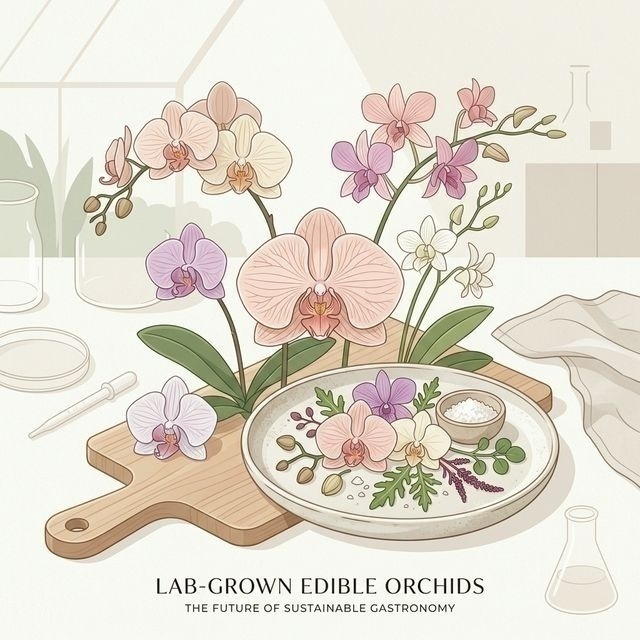
Imagine a world where your next Michelin-star meal not only tantalizes your taste buds but also nourishes the planet. The culinary landscape is undergoing a profound transformation, moving beyond traditional boundaries to embrace revolutionary approaches in how our food is grown, raised, and even created.
Plain English Section: What This Means for Your Plate
This article explores two cutting-edge movements in food: regenerative agriculture, which focuses on farming in a way that heals the environment and creates richer, more flavorful ingredients; and lab-grown ingredients, which use science to produce foods like meat, seafood, and even complex flavors without traditional farming. Together, they promise a future of sustainable, ethical, and incredibly delicious high-end dining.
Regenerative Agriculture: Reimagining the Earth’s Bounty
Regenerative agriculture is more than just sustainable farming; it’s a holistic approach designed to reverse climate change by rebuilding soil organic matter and restoring degraded biodiversity. It’s about working with nature, not against it, to produce food.
The Principles Behind the Plate
At its core, regenerative agriculture emphasizes several key practices:
* Minimal Soil Disturbance (No-Till/Low-Till): Preserves soil structure, microbial life, and carbon sequestration.
* Cover Cropping: Planting non-cash crops to protect and enrich the soil between harvests.
* Crop Rotation: Diversifying crops to improve soil health, break pest cycles, and reduce reliance on synthetic inputs.
* Integrated Livestock: Strategically grazing animals to mimic natural patterns, enhancing soil fertility and biodiversity.
* Reduced Chemical Inputs: Minimizing or eliminating synthetic fertilizers, pesticides, and herbicides.
The result is vibrant soil teeming with life, capable of producing ingredients with superior nutritional density and, crucially for chefs, unparalleled depth of flavor.
Culinary Impact: A Taste of Terroir Reimagined
For high-end chefs, regenerative agriculture offers a new palette of possibilities. Ingredients from regeneratively farmed land often possess:
* Enhanced Flavor Profiles: Healthier soil leads to more nutrient-dense plants and animals, translating to richer, more complex tastes. Think carrots with an earthy sweetness rarely found, or heritage grains with nutty, profound notes.
* Unique Varietals: A focus on biodiversity often brings forgotten or niche crops back into rotation, inspiring innovative dishes.
* Ethical Sourcing Stories: The narrative of food grown with respect for the planet resonates deeply with conscious diners and adds value to the culinary experience.
* Consistency and Quality: While nature always has variables, the health of the ecosystem often leads to more robust and reliable ingredient quality over time.
Lab-Grown Ingredients: Precision and Possibility
Alongside the return to earth-centric farming, science is offering another path to future food: ingredients cultivated in controlled environments, often referred to as cellular agriculture or precision fermentation.
The Science Behind the Plate
This field involves growing food products directly from cells or microorganisms, bypassing traditional animal husbandry or land-intensive cultivation.
* Cultivated Meat/Seafood: A small sample of cells is taken from an animal (without harm), and these cells are fed nutrients in a bioreactor, where they multiply and differentiate into muscle and fat cells, forming edible tissue.
* Precision Fermentation: Microorganisms (like yeast or bacteria) are programmed to produce specific proteins, fats, or flavor compounds. This can create dairy proteins without cows, or egg proteins without chickens.
Quick Summary for Everyone: In Plain English
Imagine taking just a few cells from a chicken, then feeding them like you would a plant. Instead of growing a whole new chicken, those cells grow into chicken meat in a special tank, ready for your plate. Similarly, we can teach tiny microbes to make milk proteins or butter flavors without needing cows or churns. It’s like brewing food, cell by cell!
Revolutionizing the Menu
Lab-grown ingredients offer unprecedented control and consistency, appealing to chefs who value precision and novelty:
* Ethical & Sustainable Sourcing: Significantly reduces land use, water consumption, and greenhouse gas emissions compared to conventional animal agriculture.
* Novel Textures & Flavors: Scientists can fine-tune nutrient profiles and growth conditions to create unique sensory experiences not possible through traditional means. Imagine a scallop with a specific umami profile enhanced for a particular dish.
* Allergen Control & Purity: Production in sterile environments minimizes contamination and allows for the creation of allergen-free alternatives.
* Consistent Supply: Not subject to weather patterns, disease, or seasonality, ensuring a stable and predictable supply chain.

The Symbiotic Future: Blending Both Worlds
The most exciting future for high-end cuisine likely isn’t an ‘either/or’ scenario but a ‘both/and’ approach. Imagine a dish featuring regeneratively farmed heirloom vegetables alongside a perfectly cultivated piece of seafood, all united by a sauce created through precision fermentation for an unmatched flavor.
This synergy allows chefs to:
* Tell a richer story about sourcing, sustainability, and innovation.
* Offer an expansive menu that appeals to diverse ethical and dietary preferences.
* Push the boundaries of creativity while maintaining a commitment to planetary health.
Challenges and Opportunities
Both regenerative agriculture and lab-grown ingredients face hurdles, including scaling production, consumer acceptance, and regulatory frameworks. However, the opportunities they present for flavor innovation, sustainable practices, and ethical food systems are immense, cementing their place at the forefront of culinary evolution.
Cultivated Cuisine: Regenerative Agriculture vs. Lab-Grown Ingredients
| Feature | Regenerative Agriculture | Lab-Grown Ingredients |
|---|---|---|
| Primary Goal | Ecological restoration, soil health, nutrient density | Sustainable, ethical, and controlled production of specific food components |
| Production Method | Holistic farming practices in natural ecosystems | Cellular cultivation in bioreactors (controlled environments) |
| Sustainability Focus | Ecosystem health, biodiversity, carbon sequestration | Resource efficiency (land, water, emissions), ethical sourcing |
| Flavor Profile | Enhanced natural terroir, depth, varietal uniqueness | Precisely engineered, consistent, novel sensory experiences |
| Scalability | Dependent on land availability and agricultural practices | High potential for large-scale, consistent industrial production |
| Cost Implications | Initial investment in ecological practices; long-term yield/quality benefits | High R&D and capital investment; potential for competitive pricing at scale |
| Consumer Perception | Generally positive, “natural,” “authentic” | Varies; often associated with “future food,” “science-y,” or “unnatural” concerns |
| Key Ingredients | Vegetables, fruits, grains, ethically raised meats | Meat, seafood, dairy, eggs, fats, specific flavor compounds |