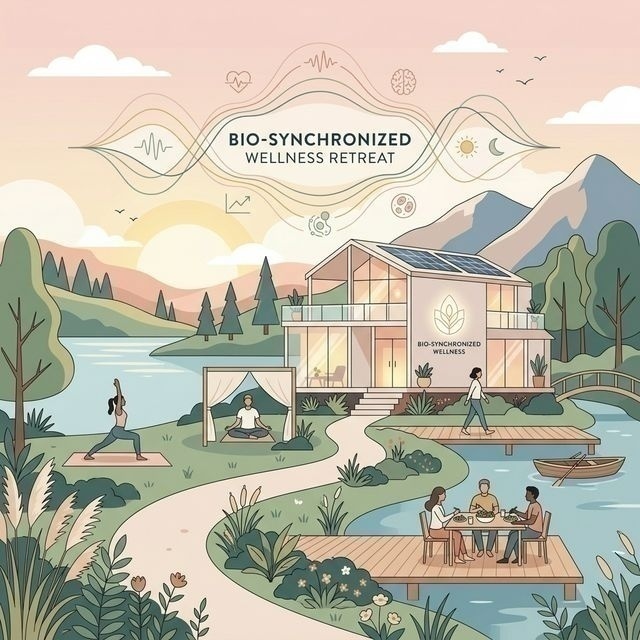
For decades, the “modern office” was defined by sterile cubicles, fluorescent lighting, and a distinct disconnection from the natural world. However, as the global conversation shifts toward holistic health and employee burnout prevention, a new frontier is emerging. Biophilic Tech is the innovative integration of nature-inspired design with Artificial Intelligence to create living, breathing work environments that actively support human well-being.
In this article, we explore how the marriage of organic elements and smart algorithms is revolutionizing the workplace, transforming the office from a mere place of labor into a sanctuary for cognitive restoration.
The Evolution of Biophilic Design
The concept of biophilia—the innate human tendency to seek connections with nature—is not new. Traditional biophilic design focuses on “analogue” elements: adding potted plants, maximizing natural light, and using wood or stone materials. While effective, these static elements often fail to adapt to the fluctuating needs of a busy office.
Enter Biophilic Tech. By embedding AI and IoT (Internet of Things) sensors into natural elements, workplaces can now respond in real-time to the physiological and psychological states of their occupants. This isn’t just about decoration; it’s about a functional symbiosis between technology and biology.
How AI Enhances the Natural Experience
AI serves as the “nervous system” of the biophilic office. It takes the passive benefits of nature and amplifies them through data-driven precision.
1. Smart Circadian Lighting
One of the most significant impacts of Biophilic Tech is AI-driven lighting. Traditional office lights are static, often disrupting our natural circadian rhythms. AI systems can now track the sun’s position and adjust the color temperature and intensity of indoor LED arrays to mimic natural daylight. This regulates cortisol and melatonin levels, reducing fatigue and improving sleep quality for employees after they leave the office.
2. Autonomous Living Walls
Green walls are beautiful, but they are notoriously difficult to maintain. Biophilic Tech utilizes AI to monitor soil moisture, humidity, and nutrient levels. These “smart forests” adjust their own irrigation and filtration cycles based on the CO2 levels in the room. When the AI detects a spike in carbon dioxide (often occurring during crowded meetings), it can trigger increased airflow through the plants to naturally purify the air.
3. Generative Soundscapes
Sound masking is a common office feature, but Biophilic Tech takes it further. Using “neuro-acoustic” AI, systems can generate adaptive nature sounds—like flowing water or rustling leaves—that change frequency based on the ambient noise levels of the office. This masks distracting conversations while lowering the listener’s heart rate and sympathetic nervous system activity.
Comparing Traditional vs. AI-Enhanced Biophilia
To understand the value proposition of this technology, we must look at how it improves upon traditional methods.
| Feature | Traditional Biophilia | AI-Enhanced Biophilic Tech |
|---|---|---|
| Maintenance | Manual watering and care; prone to human error. | Automated, sensor-driven life support systems. |
| Air Quality | Passive filtration by static plants. | Active bio-filtration with real-time CO2 monitoring. |
| Lighting | Fixed windows or standard light bulbs. | Circadian-synced smart LEDs mimicking natural sky. |
| Customization | One-size-fits-all environment. | Dynamic adjustments based on occupancy and mood. |
| ROI | Aesthetic value; moderate wellness impact. | Data-backed productivity gains and energy savings. |
| Stress Reduction | Visual only. | Multisensory (Visual, Auditory, and Olfactory). |
The Impact on Mental Health and Productivity
The integration of AI into biophilic environments has measurable benefits. Studies in environmental psychology suggest that “Attention Restoration Theory” (ART) is highly applicable here. When we are surrounded by natural fractals and organic movements—even those managed by AI—our brains can recover from the “directed attention fatigue” caused by screens and spreadsheets.
Employees working in biophilic-tech-enabled offices report a 15% increase in perceived well-being and a 6% increase in productivity. By reducing the physiological markers of stress, companies are seeing a decrease in absenteeism and a significant boost in creative problem-solving.

Implementation: The Future is Living
While the initial investment in Biophilic Tech can be higher than traditional renovations, the long-term ROI is found in human capital. As we move toward a future where the “Office” must compete with the comfort of “Home,” creating a space that actually makes people feel healthier is a competitive advantage.
For organizations looking to start, the journey begins with data. Installing air quality and occupancy sensors provides the baseline needed to implement targeted biophilic interventions. Whether it is a smart moss wall that doubles as an acoustic barrier or an AI system that shifts lighting to prevent the “afternoon slump,” the goal is the same: a workplace that breathes with its people.
Conclusion
Biophilic Tech represents the pinnacle of holistic health in the workspace. By leveraging Artificial Intelligence to bridge the gap between our high-tech lives and our biological roots, we are not just building smarter offices—we are building healthier, more resilient communities. The future of work isn’t just digital; it’s naturally intelligent.