For decades, the concept of “improving sleep” was limited to buying a firmer mattress or drinking a cup of chamomile tea. However, as we move deeper into the era of the Quantified Self, sleep has been redefined. It is no longer viewed merely as a period of inactivity, but as a critical, high-performance biological process essential for cognitive longevity.
The latest frontier in “Tech Innovations for Daily Life” is the shift from passive sleep tracking to active, AI-driven optimization. We are moving away from wearables that simply tell you that you slept poorly, and toward integrated environments that ensure you sleep perfectly.
From Passive Tracking to Active Intervention
The first generation of sleep tech focused on data collection. Smartwatches and rings provided us with graphs of our REM and deep sleep cycles, often leaving users with “orthosomnia”—an ironic anxiety about achieving perfect sleep data.
The evolution we are witnessing today is the rise of the AI-Optimized Sleep Environment. Instead of just monitoring, modern systems use machine learning to manipulate the physical environment in real-time. By utilizing non-contact sensors (such as ballistocardiography and radar), AI can detect micro-changes in heart rate variability (HRV) and respiration without the user needing to wear a single device.
The Pillars of AI-Driven Sleep Optimization
To achieve peak cognitive recovery—the process by which the brain flushes out metabolic waste via the glymphatic system—AI focuses on three primary environmental variables: Thermoregulation, Acoustic Engineering, and Circadian Lighting.
1. Dynamic Thermoregulation
Your core body temperature must drop by about two to three degrees Fahrenheit to initiate sleep. AI-powered mattress toppers now use “thermal scheduling” to cool the bed during the onset of sleep and gradually warm it up just before your scheduled wake time. This mimics the natural rhythm of the human body, drastically reducing “sleep latency” (the time it takes to fall asleep).
2. Adaptive Acoustic Engineering
Traditional white noise machines are static. AI-optimized environments, however, use “Pink Noise” and “Brown Noise” that adapt to your brainwaves. When the sensors detect a transition into Deep Sleep, the system can introduce subtle auditory pulses—a technique known as acoustic stimulation—to increase the amplitude of slow-wave oscillations, effectively “deepening” the quality of rest.
3. Circadian Lighting Integration
AI systems now sync bedroom lighting with your internal biological clock. By filtering out blue light in the evening and slowly introducing 480nm blue-wavelength light in the morning, these environments regulate melatonin and cortisol production, ensuring you wake up alert rather than groggy.
Comparing Sleep Support Systems
To understand the leap in technology, let’s look at how AI-integrated environments compare to traditional methods.
| Feature | Traditional Sleep Aids | First-Gen Wearables | AI-Optimized Environments |
|---|---|---|---|
| Primary Goal | Symptom Relief | Data Visualization | Real-time Optimization |
| User Effort | Manual (pills, tea) | Constant (must wear/charge) | Zero-Touch (ambient sensors) |
| Feedback Loop | None | Post-sleep Report | Real-time adjustments |
| Climate Control | Static (AC/Heater) | Manual Adjustment | Dynamic Thermoregulation |
| Sound Profile | Static White Noise | Generic Playlists | Adaptive Brainwave Syncing |
| Cognitive Impact | Low/Variable | Moderate Awareness | High (Maximized Deep Sleep) |
The Focus: Peak Cognitive Recovery
The ultimate goal of this technological evolution isn’t just to feel “rested”—it is to achieve peak cognitive recovery. During deep NREM (Non-Rapid Eye Movement) sleep, the brain performs essential maintenance. Information is moved from short-term to long-term memory, and the prefrontal cortex—the seat of executive function—undergoes repair.
AI systems are now being designed to “stretch” these deep sleep phases. By maintaining the perfect room temperature and sound frequency, the AI prevents micro-arousals that typically go unnoticed but interrupt the brain’s cleaning process. For high-performers, entrepreneurs, and athletes, this means entering the day with a “clean slate” of mental clarity.
The Future of Rest
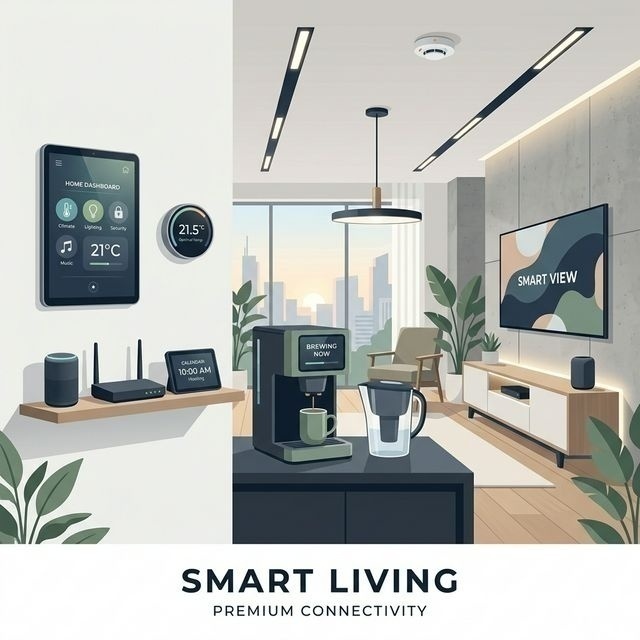
As we look forward, the integration of AI in our daily lives will become even more seamless. We are heading toward a future where your smart home knows you are tired before you do. Your kitchen will suggest a magnesium-rich snack, your lighting will dim to a warm amber hue, and your bed will pre-cool to your specific biological “sweet spot.”
The evolution of sleep tech represents a fundamental shift in how we approach health. We are no longer guessing how to rest; we are engineering it. In an age of constant digital distraction, an AI-optimized environment might be the most important piece of technology you ever invest in—not for what it allows you to do while you’re awake, but for how it protects you while you dream.