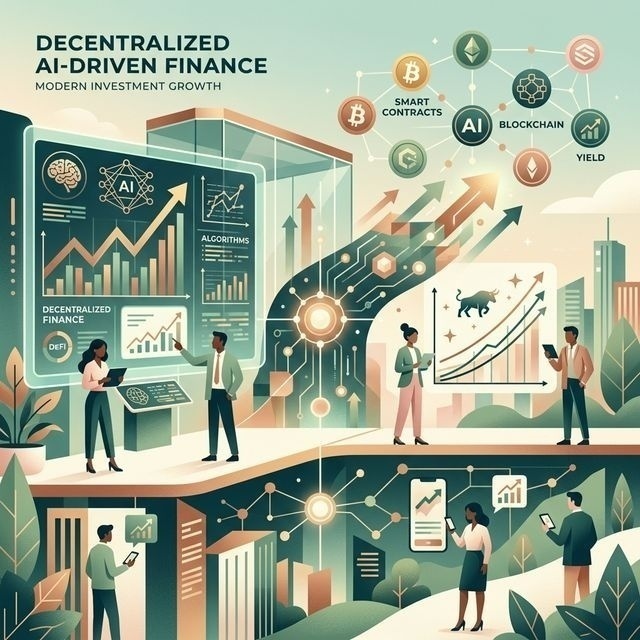
The landscape of sustainable investing is undergoing a tectonic shift. For years, Environmental, Social, and Governance (ESG) criteria were often criticized as “backward-looking” or “vague metrics” used more for marketing than for actual risk management. Enter ESG 2.0. This new era is defined by the integration of Artificial Intelligence (AI) and Big Data, transforming ESG from a static checklist into a dynamic, predictive powerhouse for the modern investor.
For personal finance enthusiasts and institutional investors alike, understanding this intersection is no longer optional—it is the key to identifying long-term value in an increasingly volatile market.
The Data Revolution: From Disclosure to Discovery
In the traditional “ESG 1.0” world, investors relied heavily on corporate sustainability reports. These documents were often released annually, were self-reported, and lacked standardization. AI is changing the game by processing “unstructured data.”
Modern AI algorithms can scan millions of data points—satellite imagery of carbon emissions, real-time social media sentiment regarding labor practices, and supply chain logistics—to provide a 360-degree view of a company’s true impact. This level of transparency makes “greenwashing” nearly impossible to hide, allowing investors to allocate capital to companies that are truly sustainable, not just those with the best PR departments.
Why “Governance” is the New Alpha
While “Environmental” factors often get the headlines, the “Governance” aspect of ESG is where AI is delivering the most significant financial Alpha. Sustainable Governance in the AI era involves using machine learning to monitor board diversity, executive compensation, and ethical AI usage itself.
Investors are now looking for the “AI Governance Premium.” Companies that implement robust ethical frameworks for their AI deployment—ensuring data privacy and bias mitigation—are proving to be less prone to regulatory fines and reputational scandals. This proactive governance is a leading indicator of management quality and long-term profitability.
Comparison: The Evolution of Sustainable Investing
| Feature | ESG 1.0 (Traditional) | ESG 2.0 (AI-Driven) |
|---|---|---|
| Data Source | Annual self-reported corporate filings | Real-time alternative data (Satellite, IoT, News) |
| Analysis Frequency | Yearly or Quarterly | Continuous, real-time monitoring |
| Verification | Subjective / Third-party audits | Algorithmic cross-referencing & Blockchain |
| Focus | Historical performance (Lagging) | Predictive risk modeling (Leading) |
| Reliability | Susceptible to greenwashing | High transparency and accountability |
Predictive Alpha: Mitigating Risk Before It Happens
The most compelling reason to embrace ESG 2.0 is its predictive power. For a personal investor, risk mitigation is the cornerstone of wealth preservation. AI-driven ESG tools can identify “weak signals” of a looming crisis long before they hit the balance sheet.
For instance, an AI model might detect an unusual pattern of safety violations or employee turnover in a manufacturing firm’s regional facility. In the old model, an investor might not know about these issues until a major accident occurred or a lawsuit was filed. In the ESG 2.0 model, the data reflects these risks in real-time, allowing investors to exit or engage with management before the stock price plummets.
How to Navigate ESG 2.0 as a Personal Investor
If you are looking to optimize your portfolio for this high-value intersection, consider the following strategies:
- Look for AI-Integrated ETFs: Instead of broad ESG funds, look for thematic ETFs that specifically mention AI-driven data analysis or “Quantitative ESG” in their methodology.
- Analyze the “S” and “G” through AI: Use retail-accessible tools that aggregate sentiment analysis. If a company has a high environmental rating but poor social sentiment (tracked via AI), it may be a risky “ESG 1.0” trap.
- Monitor AI Ethics: Invest in companies that are leaders in Responsible AI. As global regulations catch up to technology, companies with established ethical governance will be the winners.
Conclusion: The Future of Value
The intersection of Artificial Intelligence and Sustainable Governance represents the next frontier of personal finance. We are moving away from “feeling good” about investments and toward “knowing more” about them.
By leveraging AI, ESG 2.0 provides a clearer, more honest, and ultimately more profitable framework for understanding corporate value. For the savvy investor, this isn’t just about saving the planet—it’s about utilizing the most advanced tools available to build a resilient, high-performing portfolio for the decades to come. The era of high-transparency, high-value investing has arrived.